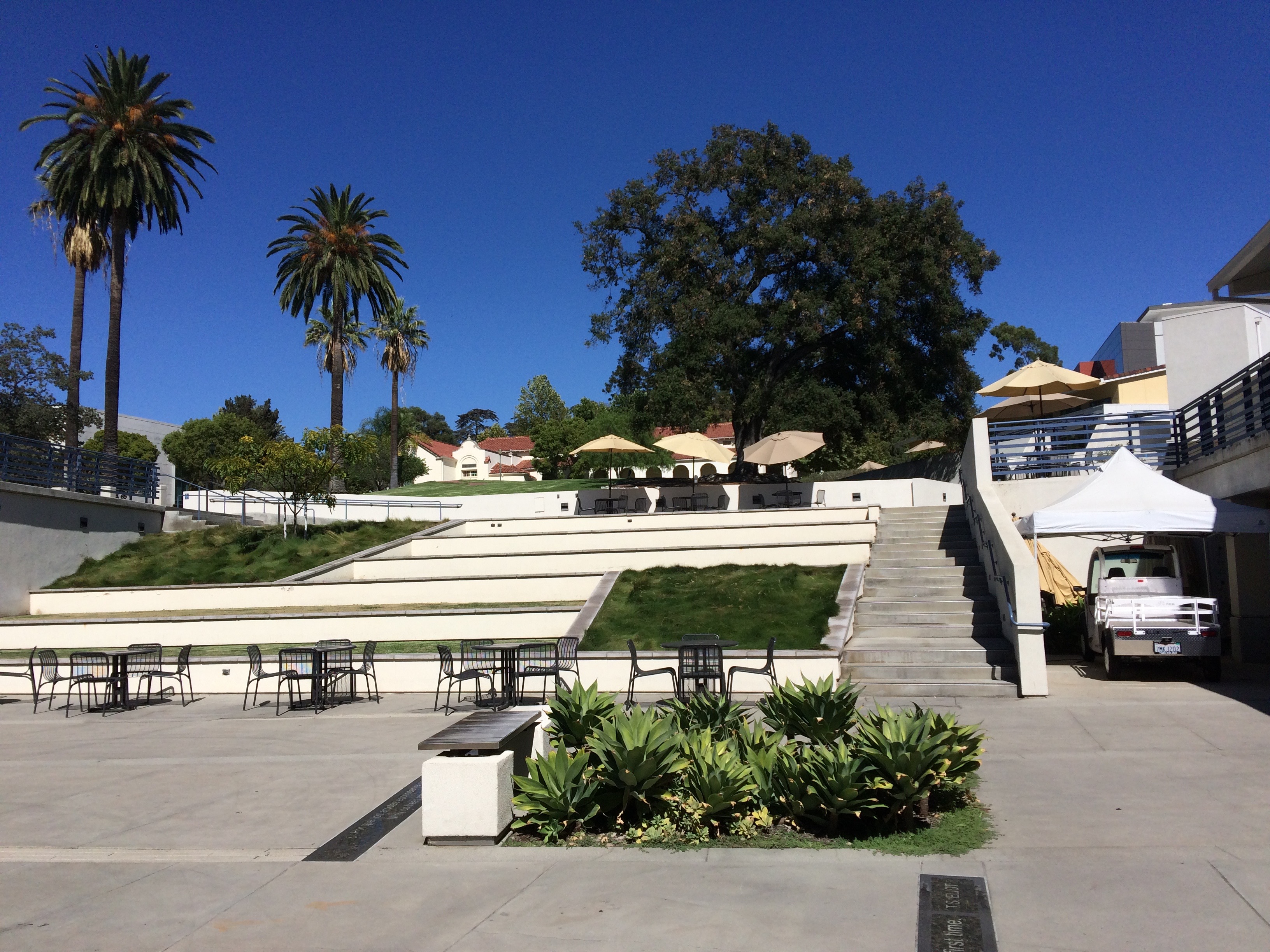
The University of Chicago’s politics in 1950

September 16th, 2010

I was just skimming a long interview with Richard Rorty (downloadable here) and I came across a really surprising description of politics at the University of Chicago sixty years ago.

RR: I was at Chicago until ‘52, and then I was at Yale from ‘52 to ‘56. I remember watching the Army-McCarthy hearings at Yale. Chicago was perhaps the left-most American university except maybe CCNY and Columbia. When the communists took Czechoslovakia in ‘48, I was a member of the Chicago student senate (or whatever they called it). I introduced a resolution of sympathy with the students of Charles University who’d been killed by the Communists. It was killed 40-2, because it was seen as lending aid and comfort to the capitalists. It was viewed as red-baiting. In those days, Chicago students genuinely believed that saying anything nasty about Stalin counted as red-baiting. The student newspaper was communist, and eventually it turned out that the editor had been registering for one credit a quarter. He was getting paid, believe it or not, by Moscow gold. He was being paid by the party to run the student newspaper. When McCarthy came along and said the Communists had infiltrated everywhere, he could produce lots of similar examples. But, of course, Chicago was not typical of the American academy at that time. I spent my time at Chicago making red-baiting remarks, as I had been brought up to do. I became unpopular with my fellow students for making them.

Admittedly, I have pretty much no evidence one way or the other, not being a historian of the university at midcentury, but given the current state of campus politics, one is hard pressed to believe that this university was ever the “left-most American university,” or that only 2.5% of elected students would have voted to condemn a Communist action. The university I know today seems more apolitical than anything else, and is certainly at least as marked by the pro-market Milton Friedman heritage as by any kind of leftist politics. To be sure, there’s a vague memory that SDS was big in the ’60s and that there was a building occupation in 1969, but even if you read the 2008 newspaper article commemorating that event, the sense is that the student body was quite diverse and far from monolithically radical. The time Rorty describes, of course, was twenty years before that, just as the Cold War was getting started — at a point when I suppose American views of the USSR may have been temporarily relatively positive, in the aftermath of the US-Soviet war-time alliance.

My guess is that Rorty is exaggerating in his description of late-40s communist sympathies at the University of Chicago; I doubt it was ever as widespread as he makes it out to be. In his description, you get the impression that pretty much 100% of students other than Rorty himself were communists, which strains credibility. Indeed, it seems exemplary of the hyperbolic mindset of someone who feels so politically outnumbered that they begin to imagine that they are the only one on their side surrounded by nothing but their opponents. “OMG, we’re surrounded by Communists!” — wasn’t that a popular trope of American political hysteria in the 50s?

Nonetheless, even if Rorty’s report is only half true, it’s enough to suggest that the politics of the university’s student body have shifted dramatically over the years. It would be interesting to know more about the historical and sociological reasons why that has happened.

Ways of using ethnographic data

September 15th, 2010


(A van advertisement called “a new look at the future” is just one example of how the “future” is mobilized in French marketing discourse.)

I am not a specialist in the literature on ethnographic methods per se, in spite of being an ethnographer by profession. This, I think, is a common situation for people in cultural anthropology; to judge by the lack of clear methodological discussion in most ethnographic articles, ethnography today doesn’t really demand much explicit methodological reflection. (In contemporary linguistic anthropology, by contrast, research methods are far more clear — though there too, and perhaps this ultimately is true of any empirical science, there is an enormous amount of unspoken choice, often arbitrary, that comes prior to the analysis of any particular object.) There is, of course, an existing literature on qualitative methods, one which in my experience is more often invoked in other social sciences, like sociology, where there is a greater range of possible methods and where method choice may demand more explicit justification. In cultural anthropology, on the other hand, ethnography is the norm and the default, and this literature on qualitative research is seldom invoked. I don’t really know that literature myself; at best I could give you citations of books I haven’t read.

Anyway, here I just wanted to give a little breakdown of ways of using ethnographic data. I won’t try to stipulate what does or doesn’t count as ethnographic data, though I’ll emphasize in passing that, paradigmatically, ethnographic data is what an ethnographer learns by personal observation of some stretch of social life somewhere. It can of course also involve any number of other materials, like photographic images, audio/visual recordings, native texts and artifacts (including genres like journalism that report on other stretches of social life), interviews (which are themselves a form of observed social life), secondary sources like demographic data, and so on.

It seems to me that any particular piece (or form) of ethnographic data can serve one of many epistemological functions, some of which I want here to delineate. Any given piece of ethnographic data can serve as any (or several) of the following:

(1) Historical data: a datum of “what happened” in a particular place and time. Part of the task of ethnography is after all to record events, processes, histories that did take place, and ethnographic data are at one level evidence of what happened. I would emphasize that this kind of “historical” data (for lack of a better word) need not be limited to direct observation, in spite of ethnography’s famous fixation on the concrete. On the contrary, our historical data is frequently quite indirect. My dissertation, for instance, will probably tell a story about French universities that really begins more than ten years ago, which is of course long before my arrival in France, and for which I’m assuming that various secondary sources provide reliable evidence. I will probably end up merging secondary sources and personal observation into one single historical narrative.

(2) Aesthetic data: a datum whose later representation conveys to readers the texture, the feeling, or the sense of a situation. There can, in other words, be ethnographic evidence that helps to create something of the ethnographic “reality-effect,” i.e. the sense of narratively superfluous but aesthetically crucial evidence that, among other things, helps create the impression that the ethnographer “really was there” in their fieldsite. (This is the sort of datum that I take it is central to creating the notorious “ethnographic authority,” but I would note that the employment of aesthetic details does have real epistemological and even emotional or stylistic functions as well as this authority function.)
Read the rest of this entry »

Academic activism flier, september 2010

September 13th, 2010

I confess I’m not sure this will really interest anyone besides me, but on the off chance… this is a quick translation of the higher education flier that accompanied the street demonstration I wrote about a few days ago. It’s useful if you want to get a sense of what oppositional faculty are talking about. I’m attending the OECD conference on higher education management this week, and something else at the French Ministry of Higher Education, so I should shortly have lots to say about the political contrast between official and oppositional discourse. Plus I’ll get to feel fair and balanced.

Mobilize together!

Working and studying conditions in research and higher education

As this school year starts, staff and students are seeing no improvement in their working, studying and living conditions. The government’s reform of teacher education [mastérisation] is showing all its negative effects: there are former job candidates who can’t apply twice, candidates who pass the hiring exam but still don’t get jobs [reçus-collés], acrobatics aimed at creating [new] “teaching MA” programs after a parody of accreditation, interns put in front of classes without any real professional training, whose secondary school colleagues have refused to tutor them… The university and research map has been profoundly modified by the accelerating restructuring of research organizations (new Instituts at the CNRS, merger between the INRP and the ENS-Lyon) and of universities (with processes of inter-campus “fusion”), which have lurched into being through bidding on the government’s recently borrowed infrastructure funds [Grand emprunt]. The multiplication of individualized research grants (PES, PFR, …) threatens teamwork, essential in our sectors. Precarity is rising among the students, under the combined effects of rising fees set by the government (tuition, student health insurance [sécurité sociale], campus dining halls) and rising housing expenses.

Job cuts

We have already seen a freeze in government workers’ salaries for 2011, cuts of 36,000 public sector jobs, and a drastic fall in the number of teaching jobs up for hiring (11,600 jobs versus 15,125 the year before, with a 55% decline for primary school teachers). Under the cover of “deficit reduction,” the latest government announcements presage new public sector blood-letting, further falls in our purchasing power, accelerating degradation of the services offered to the public, and accelerating degradation of staff working conditions, with an ever-rising growth of precarity.

Read the rest of this entry »

Fictitious seminar on imaginary disobedience

September 12th, 2010

I’ve been reading some listserve archives from the 2009 strikes and I came across a mocking proposal for an alternative seminar. I don’t think the somewhat heavy-handed irony is likely to get lost in translation.

Hello,

You will find below a proposal for an alternative seminar.

A seminar titled “The expression of social malaise” will be held every monday at 9pm. Drawing on the recent works of our colleagues from Guadaloupe and those of our working-class neighbors from 2005, we will learn to generate acts of symbolic, media-ready disobedience.

The seminar will begin with a theoretical exposition of alternative means of expressing social malaise (occupying train stations and commercial buildings, setting garbage cans on fire, vandalizing bus stops). The practical application of these means will be open for discussion, and there will be a presentation on indispensable information for strikers (about the cracks in the riot police’s armor, protecting yourself from tear gas grenades, and practical legal advice).

The second part of the seminar will be dedicated to physical exercises relevant to this expression of social malaise (exercises in dispersion, intensive running, basics of close combat, unarmed and with blades, throwing paving stones, fabricating Molotov cocktails, and so on).

Course credit for students will involve an individual and spontaneous student project, preferably of a practical nature. This seminar can be counted for credit either in Law or in Communications.

Participants from the experimental centers of Clichy-sous-bois and Villiers-le-Bel will intervene in the seminar.

A and M

PS: If this proposition is taken seriously, the organizers of the seminar are not to be held responsible.

Some of the listserve participants then chimed in with suggestions on the grading system; whereupon a professor suggested rather more seriously that even in fun, such discussions probably shouldn’t be left in the public record.

It’s probably superfluous to note, at any rate, that the humor of the proposition apparently derives from the juxtaposition between the register of illegal street violence and academic discourse. The former is mockingly dignified by the latter; the latter is profaned by the former. One is left wondering, though, what sort of impulse towards imaginary disobedience motivated the authors, and what sort of social function this humor is serving or undermining.

Higher education marches against xenophobia

September 10th, 2010

Last weekend there was a march in support of immigrants and against the expulsions of the Roma from France. The march was called “In the face of xenophobia and the politics of pillory: liberty, equality, fraternity,” and was a commentary on increasingly harsh French policing of immigrants this summer. My friend Moacir, who came to the march with me as an honorary participant-observer, has some interesting comments on the mechanical reproduction of its political messages, i.e. on how most people carried pre-typed, printed political signs and how this doesn’t necessarily discredit them, but rather constitutes a show of unity.

It strikes me, in hindsight, that it’s worth emphasizing that the march bore a diversity of political messages. While an anti-Sarkozy, pro-immigrant message was certainly the predominant message and the one picked up by the media, there were also, for instance, a number of people marching on behalf of higher education and research, attempting to add their own message to the mix and to show political solidarity with the larger project.

To the left was the “Recherche Publique Enseignement Supérieur” (Public Research Higher Education) balloon.

Later on, I found the banner of Sauvons l’Université (“Save the University!”). I asked someone what the political situation was in the universities this fall. “It’s the rentrée [ie, homecoming, the start of the year],” I was told, “so there is no situation yet; it remains to be created.” I rather like that tiny comment as a fragment of local political temporality.
Read the rest of this entry »

Fieldwork, Year 2

September 7th, 2010

I’m sorry to see I haven’t posted a thing in a month. That should change rapidly as I get back into the swing of fieldwork. Starting a second year of research feels quite different from starting a first year; the language is somewhat less problematic, the campus feels familiar, and there are a lot of people to greet. If anything, people seem a bit surprised I’ve stuck around more than a few months, which says a lot about the kinds of scripts that people expect to follow in research relationships here. I don’t think I’m the only ethnographer who’s had this experience; Amelia Fay wrote of her work in Newfoundland: “My repeated presence in the community seems to have separated me from other researchers, who come in, take what they need and never return… People here are starting to recognize me more, trust me and welcome me. It’s taking a long time to build this relationship but I’m finding it so rewarding.” I don’t know if I could bring myself to express it quite so forthrightly, but that does sound familiar.

The logistics of being a temporary visitor to a foreign country continue to frustrate, it has to be said. Here’s the view from the new apartment:

Alas, the place is too expensive to hold onto, and, somewhat against my better judgment, I’m moving into a big dorm complex for the rest of the fall. It’s not going to be the most pleasant place to live, but after all, all the famous ethnographers of universities seem to have lived in a dorm at one time or another. Admittedly, my research isn’t mainly about student domestic life, but I think it may be interesting to have some acquaintance with it.

Luckily, I have some work space to escape to, at the University of Chicago’s building in France.

It’s a bit strange having more office space than most tenured faculty at my fieldsite, which is a commentary in itself on the intense inadequacy of financial and material resources in French public universities.

Anyway, I have a lot of things to write about. More coming soon.

The academic’s work is never done

August 8th, 2010

This story is true.

Last week I was sitting on a hilltop with my book in basically the absolute middle of nowhere in Wales. Dressed in gray and brown. Motionless.

Two women maybe my parents’ age walk past me on the cliff path. We say hi, in the cursory way that’s the norm for passing hikers.

A third person goes by, and I don’t even look up. But then she peers down under my hat brim.

“Are you somebody?” she asks quizzically.

“Yeah,” I say, nonplussed by the nonsensical question.

“I saw something as I was coming,” she explains, “but I thought it was a bush or a rock.”

I laugh.

“Are you studying?” she asks after a moment.

“Yeah,” I say.

“Nice spot for it,” and she looks around at the view.

“What are you studying?”

“French politics,” I say after a second of scrambling around in my brain for a quick explanation of what I do.

“What?” she says. Her accent sounds a little German.

“French politics.”

“French politics!” she exclaims in surprise. “Well, good luck with it.”

“Thanks!” I say, smiling with a half laugh.

She goes on to her friends, tells them “French politics!”

And they go on among themselves, speaking another language, German perhaps, and taking each others’ photos with a cheap tourist camera as they vanish downhill.

The moral of this story would appear to be that if you aren’t careful and you do academic work in nonacademic places you may be mistaken for a shrubbery. Or perhaps a small boulder.

Alternatively, the moral of this story is that overinvestment in academic work can become a bizarre spectacle for passers-by.

The moral of this story, and here I’m going to be serious for a second, is that it’s mighty strange that graduate school can manage to induce this state of perpetual work where even the most obscure corners of summer are subjected to neurotic productivity compulsions.

In the end, in spite of everything that this blog pretends to know about the little dominations of academic life, I have to confess that I can’t help mostly feeling that I love my work.

Disturbing, I know.

A philosopher’s ethnic joke

July 26th, 2010

I was thinking of reading a famous — in some quarters infamous — book called La pensée 68 (i.e., ’68 Thought), by Alain Renaut and Luc Ferry, a 1988 critique of 60s French intellectuals. So far I’m only a few pages into it, but I thought I would just reproduce the epigraph, which consists of an ethnic joke that Ferry has repeated elsewhere. It goes like this:

A Frenchman, an Englishman and a German were assigned to study the camel.

The Frenchman went to the zoo at the Jardin des Plantes, spent half an hour there, talked to the keeper, threw bread to the camel, teased it with the tip of his umbrella, and, when he got home, wrote a column, for his newspaper, full of keen and spiritual observations.

The Englishman, along with his tea-box and comfortable camping supplies, went and set up his tent in the Oriental countries, and after a stay of two or three years, produced a thick volume overflowing with facts, without order or conclusion, but with real documentary value.

As for the German, full of disdain for the Frenchman’s frivolousness and the Englishman’s absence of general ideas, he closed himself up in his room to write a work of several volumes, entitled: Idea of the camel drawn from the conception of the self.

Un Français, un Anglais, un Allemand furent chargés d’une étude sur le chameau.

Le Français alla au jardin des Plantes, y passa une demi-heure, interrogea le gardien, jeta du pain au chameau, le taquina avec le bout de son parapluie, et, rentré chez lui, écrivit, pour son journal, un feuilleton plein d’aperçus piquants et spirituels.

L’Anglais, emportant son panier à thé et un confortable matériel de campement, alla planter sa tente dans les pays d’Orient, et en rapporta, après un séjour de deux ou trois ans, un gros volume bourré de faits sans ordre ni conclusion, mais d’une réelle valeur documentaire.

Quant à l’Allemand, plein de mépris pour la frivolité du Français et l’absence d’idées générales de l’Anglais, il s’enferma dans sa chambre pour y rédiger un ouvrage en plusieurs volumes, intitulé : Idée du chameau tiré de la conception du moi.

I’m not sure I find it a extremely funny joke, but academic humor is always worth documenting as a cultural artifact, if nothing else.

Coca-Cola and postwar market liberalization

July 22nd, 2010

From time to time I find myself reading about episodes in French history that, while not strictly related to the university system, nonetheless seem like important points of historical reference. This one will, I guess, probably be well known to any French historian, but it was a surprise to me. It has to do with the economic politics of Coca-Cola’s arrival in France in the period just after the Second World War. Let me quote a long passage from Robert Gildea’s handy France since 1945, which is where I found out about this:

The Americans insisted on the right political conditions for aid [direly needed by post-war Europe]; they also demanded the right economic conditions. These were imposed by a series of missions in each European country receiving Marshall Aid… and bilateral agreements made with each recipient power. That with France was signed in June 1948, and the three brief ministries in power between 1948 and 1949 all pursued policies of economic austerity, balancing the budget by spending cuts and tax rises, and price and wage controls to bring down inflation. The Americans also required that all barriers to their exports and investment be removed, so France was inundated not only by American products but also by propaganda selling the American way of life. ‘Will France become an American colony?’ asked one book in 1948, exposing the threat from American Westerns and gangster movies, children’s comics such as Donald, Tarzan, and Zorro, and magazines controlled by Reader’s Digest, called Sélection in France.

The French won a minor victory in September 1948, when the French boxer Marcel Cerdan became world champion by beating an American in Jersey City. The real battle, however, was fought over Coca-Cola. Fed to GIs during the war, it was then the object of a sustained campaign to penetrate European markets. Coca-Cola was not simply a product, it was an image: that of the consumer society, on the wings of mass advertising, ‘the essence of capitalism’ in every bottle according to its president, James Farley, a weapon in the global ideological battle against Communism. Bottling operations were started in Belgium, the Netherlands, and Luxembourg in 1947, but in France there was great opposition, first from the Communist party, which argued that they would become ‘Coca-colonisés’ and that the distribution network would double as a spy network, and second from the winegrowing, fruit-juice, and mineral-water interests. The French government, concerned by the trade deficit and the repatriation of profits, turned down requests by Coca-Cola to invest in France in 1948 and 1949, and banned the ingredients from Casablanca.

A bill was tabled by the deputy mayor of Montpellier on behalf of the winegrowers to empower the health ministry to investigate the content of drinks made with vegetable extracts in the name of public health. Its passage through the National Assembly in February 1940 provoked a storm of controversy. Farley visited the State Department and the French ambassador in Washington. The Americans put pressure on the French government. An article appeared in Le Monde entitled ‘To Die for Coca-Cola’, mimicking the ‘To Die for Danzig?’ article of 1939. ‘We have accepted chewing gum and Cecil B. De Mille, Reader’s Digest and be-bop,’ it read. ‘It’s over soft drinks that the conflict has erupted. Coca-Cola seems to be the Danzig of European culture. After Coca-Cola, enough.’ The French government was caught between the anger of French public opinion and the need to retain the favour of the American government. In the end the matter was resolved by the French courts, which ruled that the contents of Coca-Cola were neither fraudulent nor a health hazard. The French government retained its honour and the Americans obtained their market.

Read the rest of this entry »

Geometrical space in French universities

July 13th, 2010

Looking back at my photos of Toulouse 2-Le Mirail, I’m struck by a common visual trait: the sheer repetition of cartesian grids in academic space.

The very tiles on the walls are gridded.

The bars and grills of the windows recede along their grid towards an unreached vanishing point.

In a courtyard at Toulouse, the pillars run in rows. The cement beams run in columns. The bench has a predictable railing. The windows are little boxes of crosses. The grass is boxed in. The one curved cement beam in the open ceiling only serves to set off the space’s overall linearity.

The chairs and desks are in alternating rows, their regularity still evident even if we look at them from an angle.

One starts to wonder if the campus was designed to make the individual feel a sense of vertigo in the face of the endlessness of this rectangular tunnel. The plane of the ceiling, broken up into a vast set of cement indentations, mirrors that of the tiled walkway. The sides, admittedly, are less regular, but even there we see regular columns, symmetrical pathways leading off on both sides.

Read the rest of this entry »